(An adapted version of this post was published on our previous blog on 11/4/2014.)
By Christina Fitzpatrick, Archivist
“You were far more indispensable than the public knows to John Kennedy’s success as a Senator, candidate and President. He knew it, however; and I know he would want me to express his deep gratitude.” – Theodore Sorensen to Myer Feldman upon learning that Feldman was leaving the White House, 23 January 1965
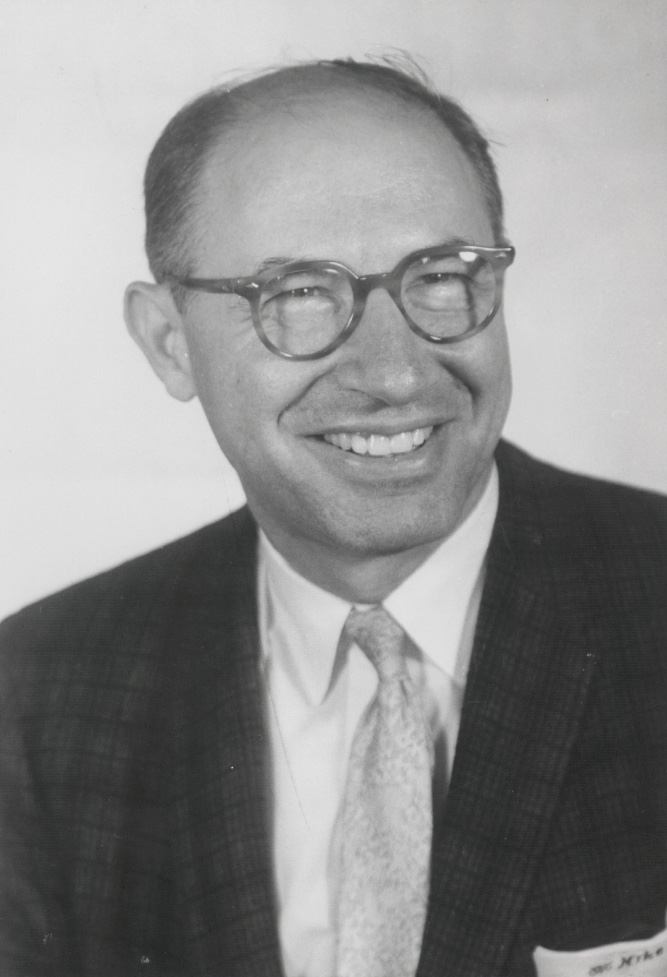
The Myer Feldman Personal Papers are open and available for research. This collection, opened in October 2014, provides an in-depth look at the work of one of President Kennedy’s closest advisors, his Deputy Special Counsel. Feldman’s White House Staff Files are also available for research, as well as his 14 oral history interviews.
Myer Feldman earned a law degree from the University of Pennsylvania and was serving as counsel to the U.S. Senate Banking and Currency Committee when he first met Theodore C. Sorensen and Senator John F. Kennedy. Feldman joined Kennedy’s staff as Legislative Assistant in 1958. During the 1960 presidential campaign, Feldman was Director of Research for the Democratic ticket. After winning the election, President Kennedy appointed Feldman to the post of Deputy Special Counsel. He served directly under Sorensen, who was Special Counsel to the President. After President Kennedy’s death, President Lyndon B. Johnson retained Feldman and promoted him to Counsel in April 1964. During Johnson’s presidential campaign in 1964, Feldman led the effort to compile information on opponent Barry M. Goldwater. After leaving the White House in February 1965, Feldman returned to private law practice in Washington, D.C.
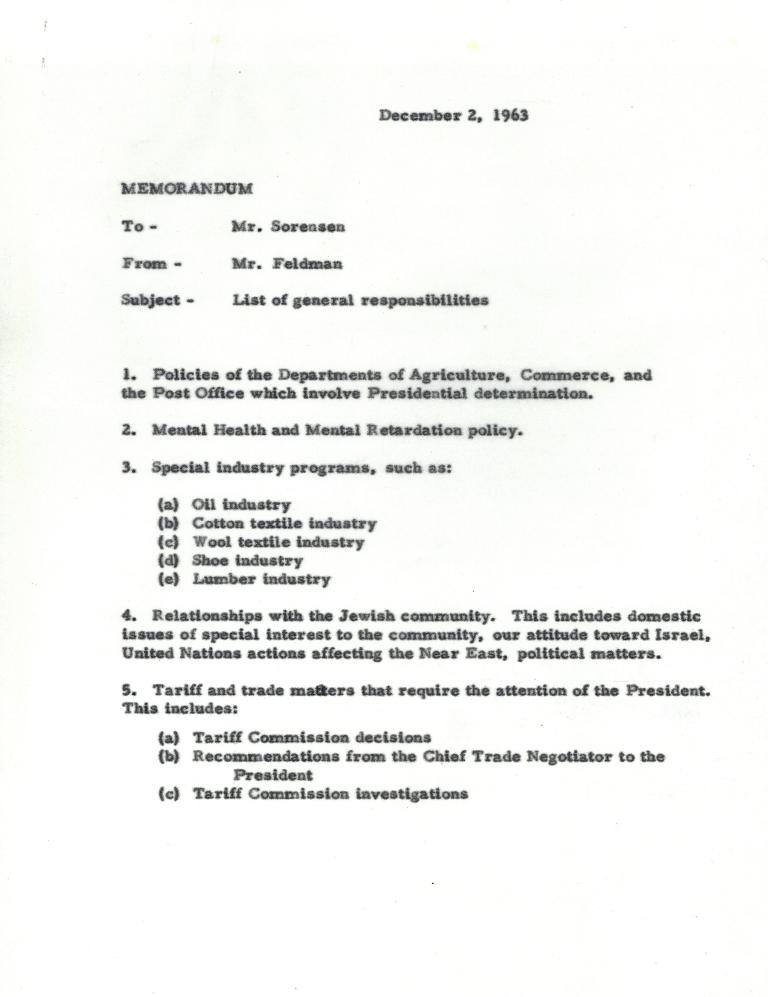
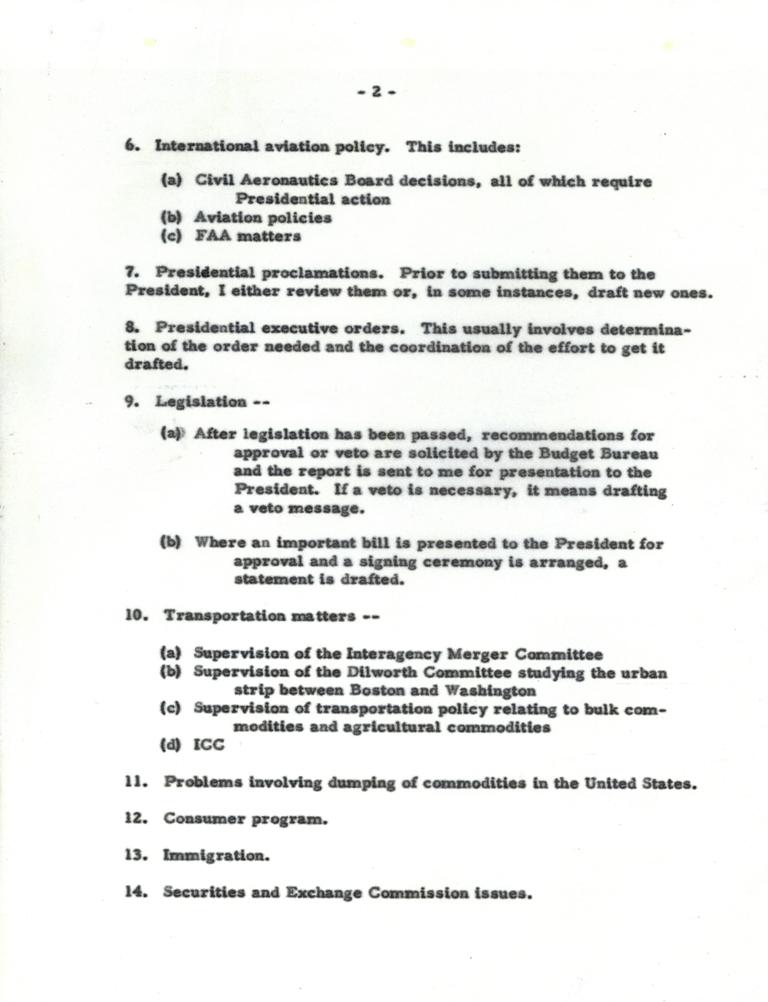
This collection covers a wide range of topics due to Feldman’s many duties in the White House. In the memo seen below, he outlines his responsibilities in areas such as agriculture, commerce, aviation, transportation, immigration, and mental health. However, he was most influential as President Kennedy’s liaison to the Jewish community. As he states, this included “domestic issues of special interest to the community, our attitude toward Israel, United Nations actions affecting the Near East, [and] political matters.”
The following four topics are especially well documented in the Myer Feldman Personal Papers.
Israel and the Middle East
Feldman served as the main White House advisor on matters related to Israel, and also acted as liaison to the Jewish community in the United States. He helped shape the administration’s strategy on Israel and the Middle East as tensions in the region ran high. When the president wanted to have direct policy discussions, he often sent Feldman on a secret diplomatic mission to confer with Israeli leaders face-to-face. President Johnson dubbed Feldman his “prime minister” to Israel in recognition of his contributions to important foreign policy decisions.
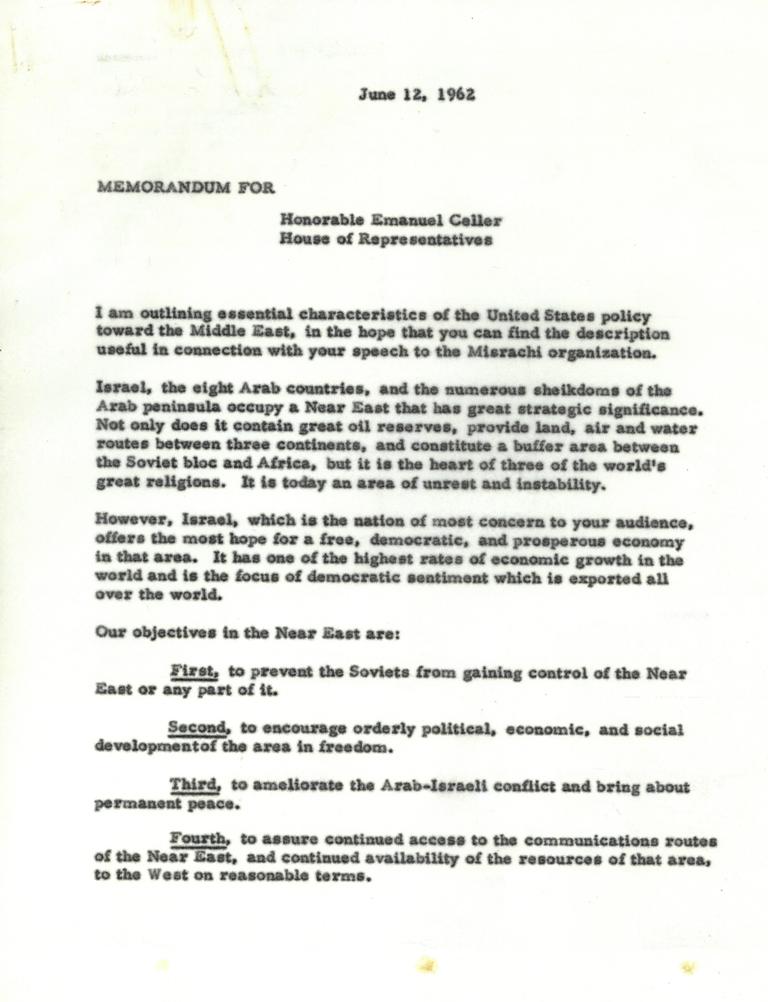
Excerpt of memo from Feldman to Rep. Emanuel Celler, 12 June 1962. Feldman outlines the “essential characteristics of the United States policy toward the Middle East.” He lists four main objectives to pursue in the region. View the entire folder here.
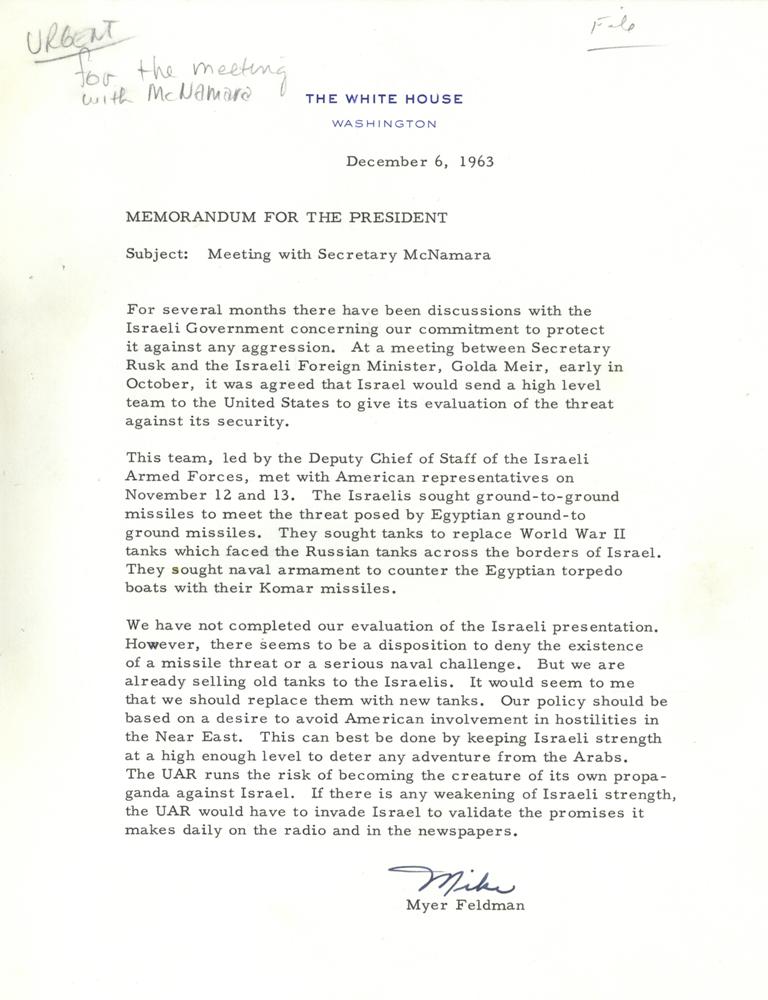
In one of the most controversial matters concerning the Middle East, Feldman advocated selling weapons to Israel in order to help defend the country against its enemies in the region. He wrote: “Our policy should be based on a desire to avoid American involvement in hostilities in the Near East. This can best be done by keeping Israeli strength at a high enough level to deter any adventure from the Arabs.” Senator Ernest Gruening took exception: “Such a move can only serve to give United States approval to the arms race in the Middle East.” Read more about Feldman’s role in selling Hawk missiles to Israel in this oral history interview.
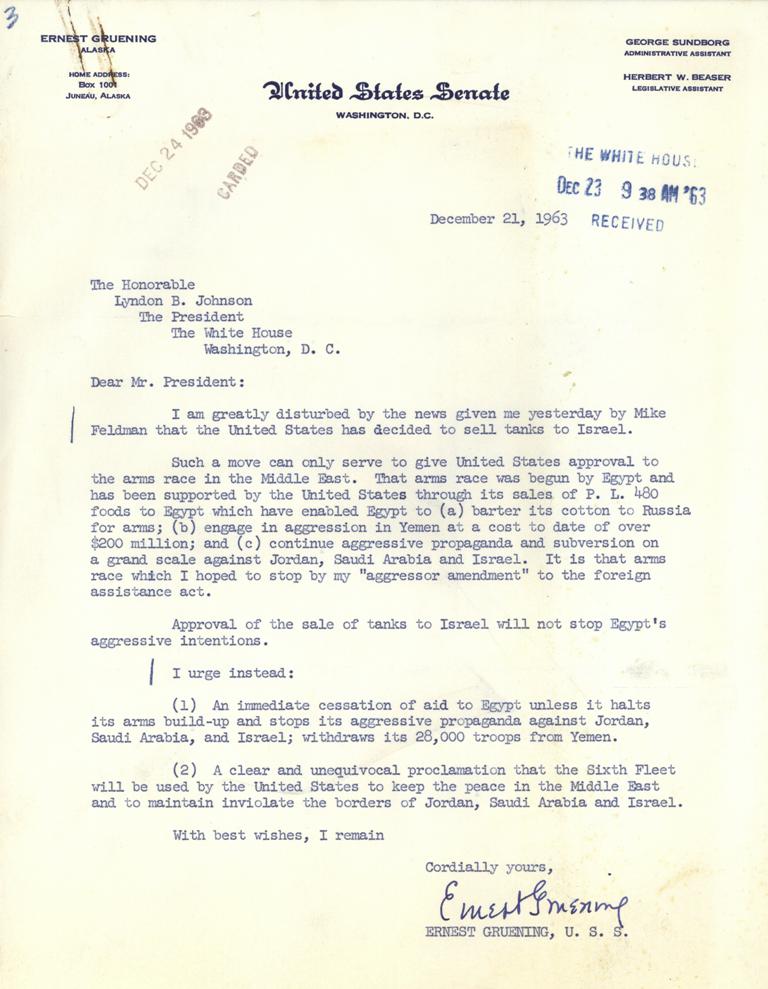
(Right) Letter from Sen. Gruening to President Johnson in response, 21 Dec 1963. View the entire folder here.
Immigration reform
Soon after the inauguration, President Kennedy asked Feldman to monitor progress on immigration legislation in Congress. The administration was seeking a complete overhaul of the existing immigration policies, and specifically targeted the national origins quota system for elimination. Many different plans were proposed but an acceptable compromise proved extremely difficult until the Immigration and Nationality Act was signed into law by President Johnson on October 3, 1965. Although Feldman had left the White House by then, the legislation would not have been possible without his work on the issue over the previous four years.
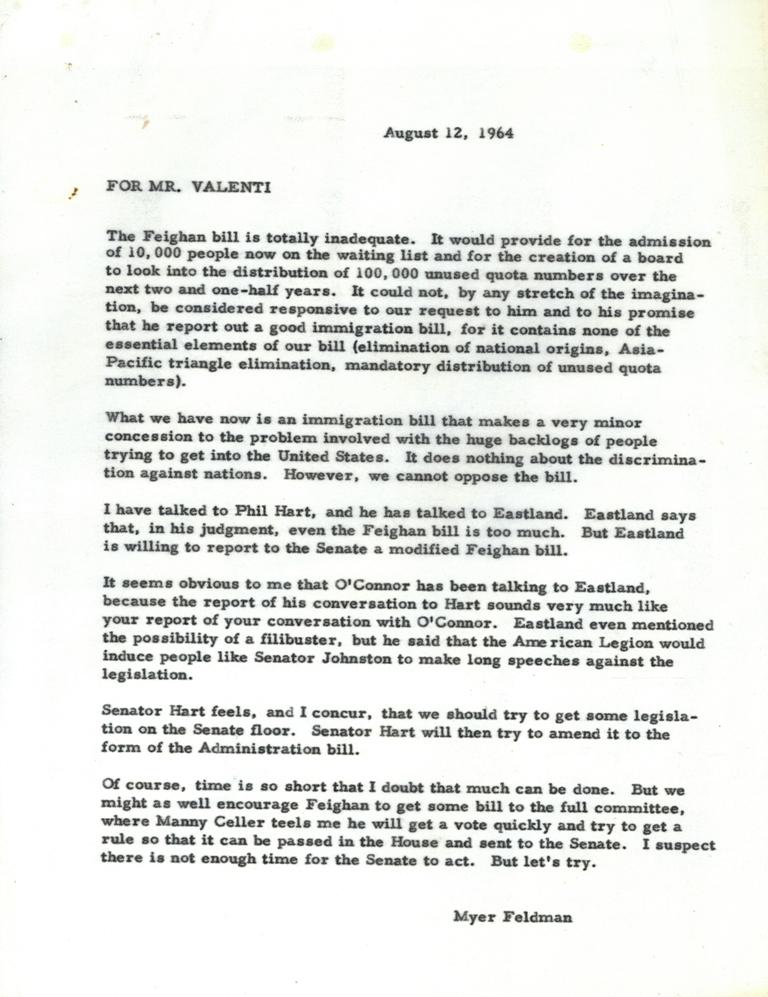
Memo from Feldman to Jack Valenti on the immigration bill proposed by Congressman Michael A. Feighan, 12 Aug 1964. Feldman writes that the plan “contains none of the essential elements of our bill (elimination of national origins, Asia-Pacific triangle elimination, mandatory distribution of unused quota numbers).” View the entire folder here.
International trade and tariffs
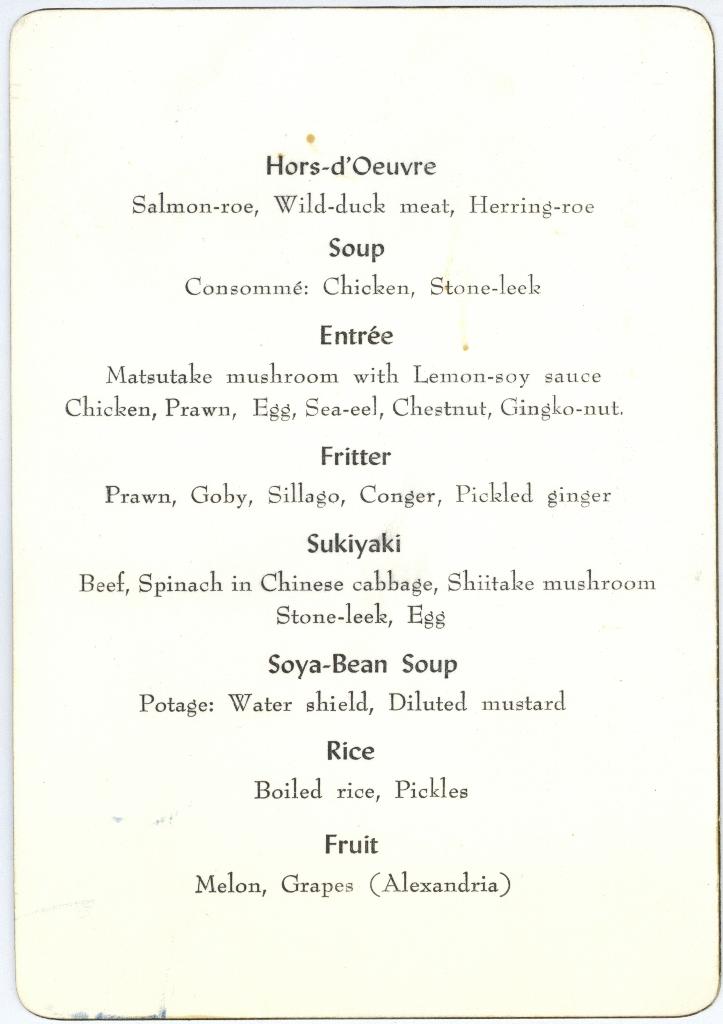
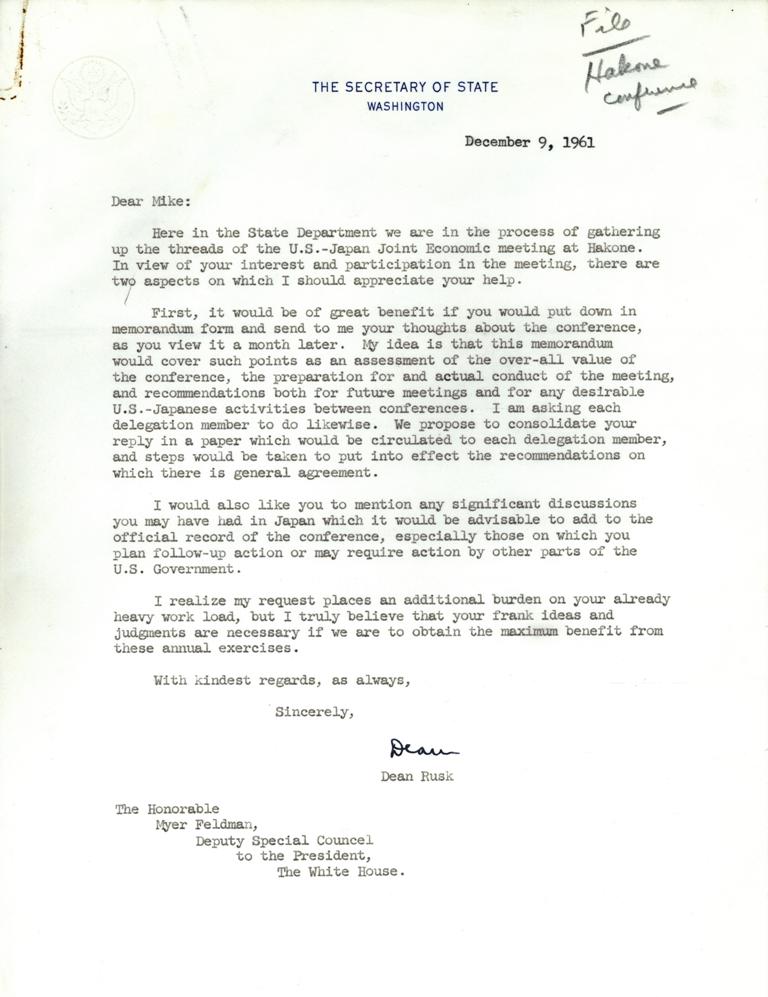
Feldman was responsible for briefing the president on matters pertaining to trade and tariffs. He traveled to Hanoke, Japan, in November 1961 to attend the conference of the Joint U.S.-Japan Committee on Trade and Economic Affairs. When Congress passed the Trade Expansion Act in 1962, the White House gained an expanded role in negotiating tariffs with foreign countries. Feldman’s records contain many files on efforts to change import and export rates on a wide range of products, from cotton and steel to shoes and poultry. The next period of international trade negotiations (the General Agreement on Tariffs and Trade, or GATT), held from 1964 to 1967, was named the “Kennedy Round” in honor of the deceased president and his administration’s efforts in the field.
Transportation
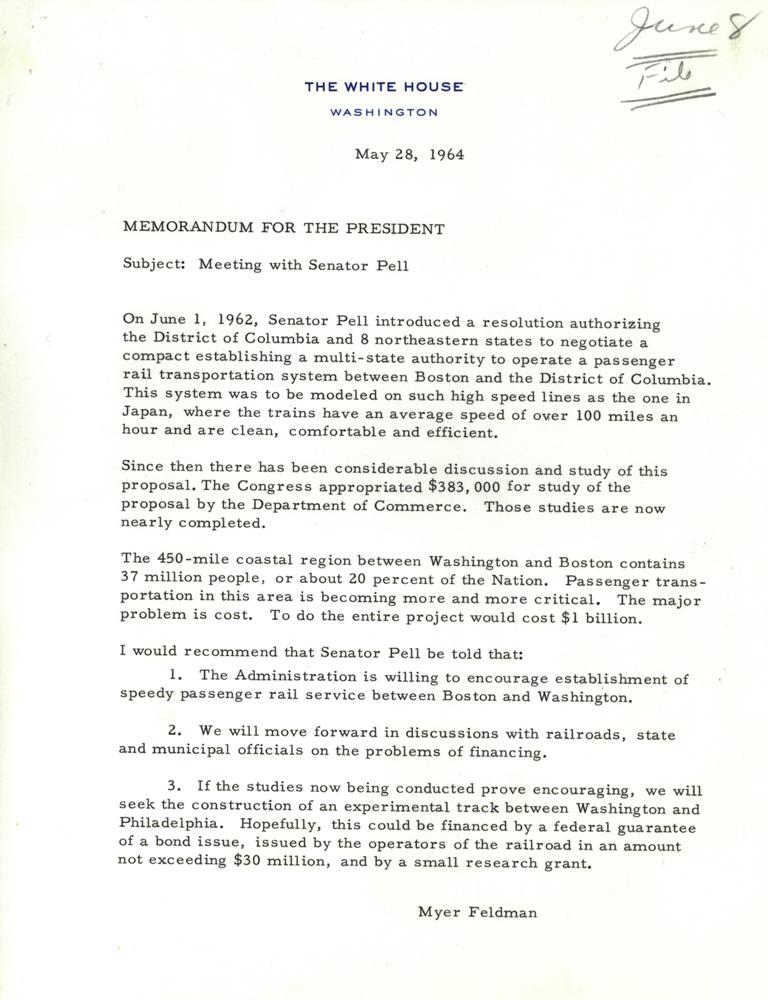
Feldman also handled a variety of matters pertaining to transportation and aviation. One ambitious project under consideration by the administration was a high-speed rail line along the Northeast Corridor. The idea, introduced by Senator Claiborne Pell in 1962, planned to link Washington, D.C., New York City, and Boston via passenger trains running at speeds of 100 miles per hour or more. Feldman kept tabs on the proposal as the Commerce Department conducted feasibility studies in 1964. Ultimately Congress passed the High Speed Ground Transportation Act of 1965, which was the first commitment by the federal government to fund and develop high-speed rail service in the United States.
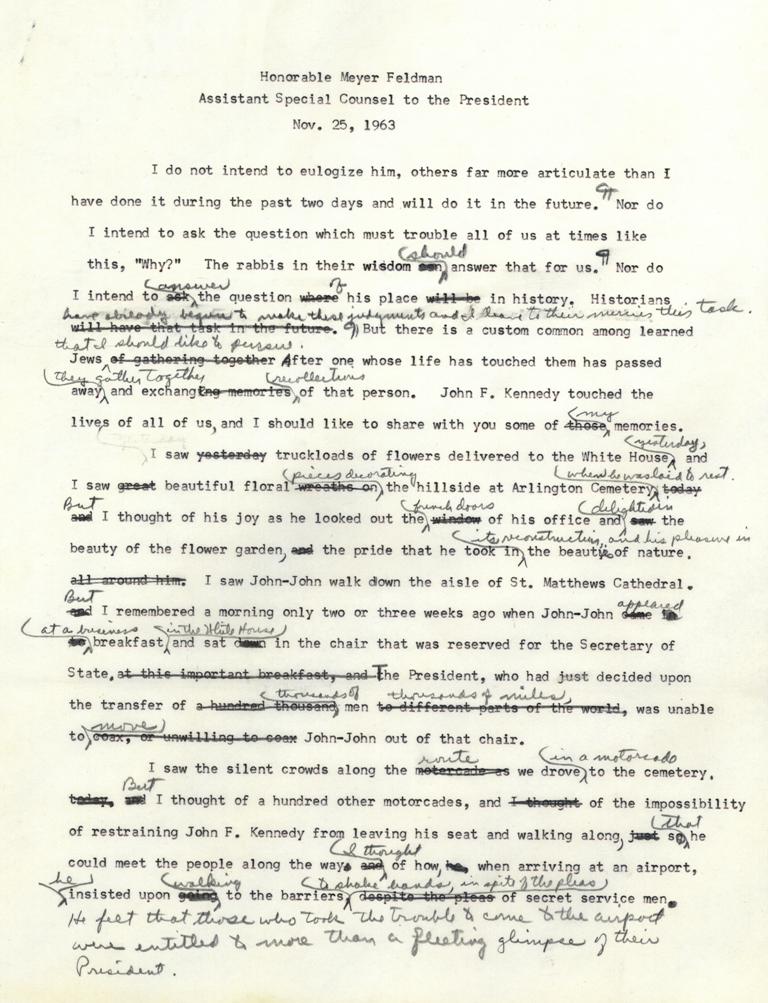
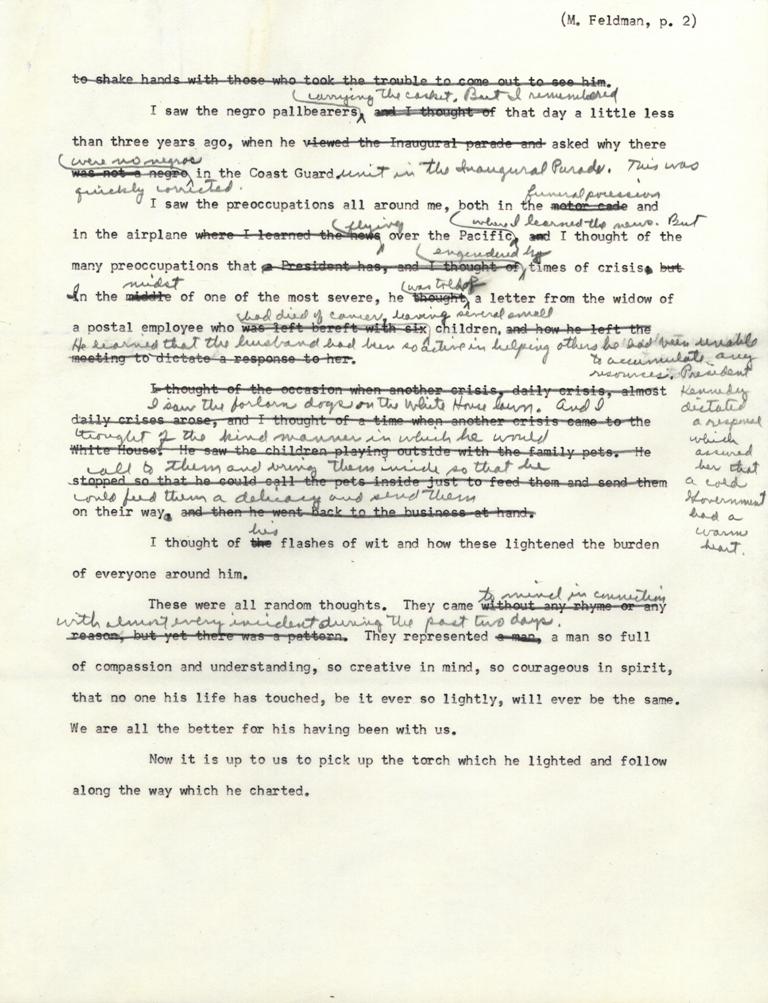
Finally, the Myer Feldman Personal Papers provide one perspective on how the assassination of President Kennedy affected his staff (and close friends) and how they adjusted to the different atmosphere of the Johnson administration. Feldman was on a plane to Japan when he heard the news of President Kennedy’s assassination. In shock, he and the other cabinet members on board promptly returned to Washington. Several days later, Feldman gave a heartfelt eulogy to JFK, saying “Now it is up to us to pick up the torch which he lighted and follow along the way he charted.”